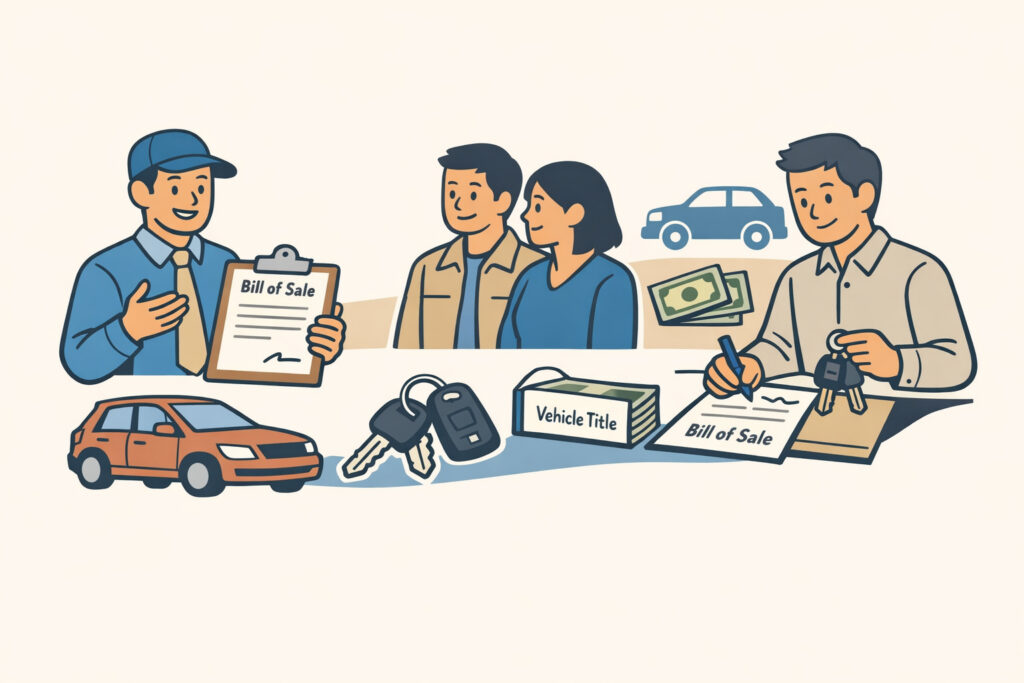
You just agreed on a price for a used car in a parking lot, shook hands, and now the seller is asking, “So do we need paperwork for this?” The answer is almost always yes — and understanding the bill of sale requirements for vehicle transactions can save you from title disputes, tax headaches, and even fraud accusations down the road. Whether you’re the buyer or seller, this document is your proof that a legitimate transfer happened.
What Is a Vehicle Bill of Sale and Why Does It Matter?
A vehicle bill of sale is a written record that ownership of a car, truck, motorcycle, or other motor vehicle has been transferred from one party to another. Think of it as a receipt on steroids — it doesn’t just confirm payment, it identifies both parties, describes the vehicle in detail, and establishes the exact date and terms of the sale.
Most states require a bill of sale for private vehicle transactions. Even in states that don’t technically mandate one, your local DMV will likely ask for it when the buyer tries to register the vehicle and transfer the title. Without it, you’re stuck in a bureaucratic limbo that can take weeks to resolve.
I’ve seen sellers skip this step because they assumed the signed title was enough. Three months later, they received a toll violation for a car they no longer owned — because there was no dated proof of transfer to show the authorities.
Key Information Every Vehicle Bill of Sale Must Include
A legally sound vehicle bill of sale should contain the following details:
Buyer and seller identification. Full legal names, addresses, and contact information for both parties. A nickname or first name only won’t hold up if there’s a dispute.
Vehicle description. Year, make, model, body type, color, and — critically — the Vehicle Identification Number (VIN). The VIN is the single most important identifier. Double-check it against the dashboard plate and the driver’s side door jamb before writing it down.
Odometer reading. Federal law under the Truth in Mileage Act requires disclosure of the current mileage for most vehicles under 20 years old. Misrepresenting mileage is a federal offense, so record this accurately.
Sale price. The exact amount paid. If the vehicle was a gift, state that the sale price is $0. Some states calculate sales tax based on this figure, so understating the price to reduce taxes is illegal — and DMVs have gotten much better at flagging suspiciously low amounts.
Date of sale. This establishes when liability transfers from seller to buyer. Any parking tickets, accidents, or violations after this date are the new owner’s responsibility.
Condition disclosure. Note whether the vehicle is sold “as-is” or with any warranties. In private sales, “as-is” is the standard, meaning the buyer accepts the vehicle in its current condition.
Signatures. Both buyer and seller must sign. Some states require notarization — New Hampshire, Montana, West Virginia, and Louisiana are among those with notarization requirements for certain transactions.
State-by-State Differences You Should Know
Here’s where things get tricky. There is no single federal bill of sale form for vehicles. Each state sets its own rules:
In California, the DMV provides form REG 135 as the official bill of sale, but any written document containing the required details is accepted. California also requires a smog check certificate for most vehicles.
Texas requires Form 130-U for title transfers but also recommends a separate bill of sale. Texas charges 6.25% motor vehicle sales tax based on the purchase price or the standard presumptive value — whichever is higher.
Florida requires notarization of the bill of sale if no title is available. The state also mandates that the seller provide a mileage disclosure on the title itself.
New York uses form DTF-802 for sales tax purposes, which essentially functions as a bill of sale. The buyer needs this at the DMV along with the title.
If you’re buying or selling across state lines, use the requirements of the state where the vehicle will be registered. That’s the DMV you’ll be dealing with.
Common Myths About Vehicle Bills of Sale
Myth: A signed title replaces a bill of sale. Not true. The title transfers ownership of the vehicle, but it doesn’t record the sale terms — the price, the date, the condition, or the odometer reading. These two documents serve different purposes, and you need both.
Another widespread misconception is that bills of sale are only needed for expensive vehicles. Even if you’re selling a $500 beater, the document protects you. Without proof of the sale date, you could be held responsible for the car indefinitely — including any impound fees, tolls, or accidents linked to it.
Step-by-Step: Completing a Vehicle Bill of Sale
Step 1: Verify the vehicle details. Check the VIN on the physical vehicle, not just the title. Title washing — where salvage titles are laundered through states with weaker reporting — is a real problem. A VIN check through the NMVTIS database costs a few dollars and can reveal hidden history.
Step 2: Use a proper template. A general bill of sale works for simple transactions, but vehicle sales benefit from a dedicated form that includes fields for VIN, odometer, and lien status.
Step 3: Fill in all fields completely. Leave nothing blank. If a field doesn’t apply, write “N/A” rather than leaving it empty. Blank fields invite disputes.
Step 4: Both parties sign and date the document. Make two originals — one for the buyer, one for the seller. Photocopies are fine for personal records, but each party should have a signed original.
Step 5: Handle the title transfer and DMV registration promptly. Most states give the buyer 15–30 days to register the vehicle after purchase. Missing this deadline typically results in late fees.
When Additional Documents Are Needed
A bill of sale alone isn’t always sufficient. If you’re financing the purchase privately — say, paying in installments — you’ll want a promissory note documenting the loan terms alongside the bill of sale. If the vehicle is part of a larger transaction involving equipment or property, a broader sales agreement may be more appropriate.
For transactions involving estates, repossessions, or vehicles with missing titles, additional paperwork like a bonded title application or court order may be required. Check your state DMV’s website before proceeding — these situations have strict procedural requirements.
Frequently Asked Questions
Do I need a bill of sale if I’m gifting a vehicle to a family member?
Yes. Even for gifts, most states require a bill of sale to process the title transfer. List the sale price as $0 and note that the transaction is a gift. Some states offer reduced or waived sales tax for family transfers, but you still need the paperwork.
Can I write a bill of sale by hand?
Absolutely. A handwritten bill of sale is legally valid as long as it contains all required information and both parties sign it. That said, a typed or printed template reduces the chance of errors and is easier for DMV clerks to process.
What happens if I lose my copy of the bill of sale?
Contact the other party for a copy first. If that’s not possible, your DMV may have a record if the document was submitted during registration. In the worst case, you may need to file an affidavit confirming the transaction details. This is why keeping the original in a safe place matters.
A vehicle bill of sale takes ten minutes to complete properly. Skipping it can cost you months of hassle with the DMV, disputes with the other party, or liability for a vehicle you thought you’d sold. Fill it out, sign it, keep your copy — and move on knowing the transaction is locked down.