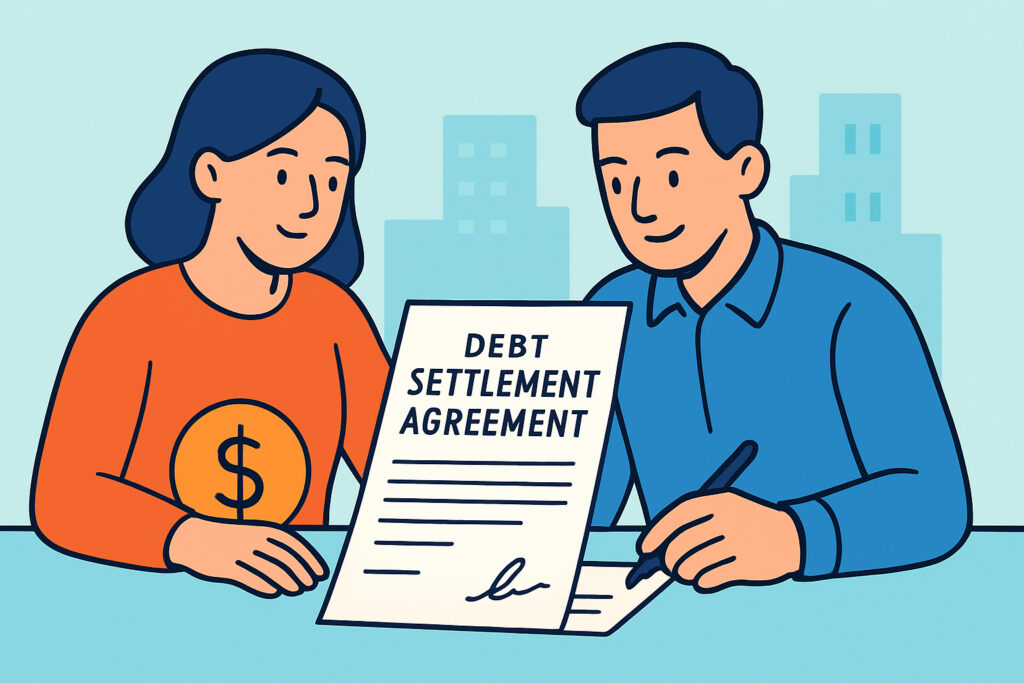
Debt settlement only protects you if the deal is on paper before you pay. Maybe you’re on the phone with a collector who has just offered to accept $3,000 on a $7,500 credit card balance and wants payment today. A written debt settlement agreement is what turns that offer into an enforceable promise. This article covers what the document has to say, when to get it signed, and what happens after the payment clears, including taxes and your credit report.
Why a Written Debt Settlement Agreement Matters
Spoken promises from collectors are hard to prove. The person you spoke to may leave the agency, the account may be sold, and the recording, if one exists, belongs to the collector and not to you.
Here is a scenario that shows up again and again. A borrower in Ohio owes $8,400 on a charged-off Visa account that has been sold to a debt buyer. A phone representative agrees to $3,200 in full settlement. The borrower sends the money by debit card the same afternoon. Fourteen months later, a second collection agency calls about a “remaining balance” of $5,200. The account was sold again, and nothing in the file shows the settlement. Without a letter, the borrower has only a bank statement showing a $3,200 payment, which proves money was paid but not what it was paid for.
A signed agreement closes that gap. It also gives you evidence if a collector breaks its word in violation of the Fair Debt Collection Practices Act (FDCPA) or Regulation F, the CFPB rule that took effect on November 30, 2021.
Terms Every Debt Settlement Agreement Needs
A consumer attorney reviewing a settlement letter first checks that it identifies the debt beyond doubt. That means the original creditor, the last four digits of the account number, the current owner of the debt, and the balance being settled. If a debt buyer such as Portfolio Recovery Associates or Midland Credit Management holds the account, the letter should name them as the creditor and say that they have the authority to settle.
The core terms should be easy to find:
– The exact settlement amount and the due date, or the schedule if paid in installments
– A statement that payment satisfies the debt in full and the remaining balance is waived
– A promise not to sell, transfer, or reassign the unpaid balance
– How the account will be reported to Equifax, Experian, and TransUnion
– What happens if a payment is late, including any grace period
For installment deals, a separate payment plan agreement can sit alongside the settlement letter. The grace period clause matters here. Many collector templates say that one missed payment cancels the whole deal and revives the full original balance, minus what you’ve paid. Asking for 10-15 days to cure a missed payment is a reasonable request, and collectors often agree to it.
How to Get the Agreement in Writing Step by Step
Start by confirming who owns the debt. Under Regulation F, collectors must send a validation notice. If you haven’t received one, ask for it in writing within the 30-day dispute window.
Next, make your offer in writing. A short letter or email stating your proposed amount works. Debt buyers often purchase accounts for a few cents per dollar, so first offers in the 25-35% range are common, and final deals often land between 40 and 60%. Original creditors usually settle for more.
Once you agree on a number, ask for the terms on company letterhead before any money moves. Read every line. If the letter says “settled in full” in one paragraph and “partial payment” in another, have it corrected first.
Then pay using a method you control, such as a cashier’s check, money order, or one-time bank transfer you start yourself. Don’t give the collector ongoing ACH access to your checking account. Afterward, ask for a “paid as settled” or zero-balance confirmation letter, and keep both letters for at least 7 years.
If a lawsuit has already been filed, the rules change. A private letter doesn’t end a court case. You need a stipulated dismissal or, if a judgment was entered, a satisfaction of judgment filed with the court clerk. A settlement agreement drafted for litigation, rather than a simple collector letter, is the right tool at that stage.
Common Mistakes That Undo a Settlement
The most expensive mistake is paying first and asking for the letter later. Once the collector has your money, it has no reason to send anything.
The second mistake is ignoring the statute of limitations. In many states, even a small payment on an old debt can restart the limitations period. Someone who settles a debt that is 6 years old and then misses the second installment may be open to a lawsuit that could not have been brought the week before. Check your state’s rules before you send anything on an old account.
The third mistake is agreeing to “update the account” on your credit report without saying how. That phrase can mean anything. Ask for exact wording, such as “paid in full, settled for less than full balance” or “account paid, zero balance.”
Myths About Settled Debt
One common myth is that a settled debt drops off your credit report. It doesn’t. Under the Fair Credit Reporting Act, the collection or charge-off stays on your report for up to 7 years from the date of first delinquency. Settling changes the status and stops the balance from showing as owed, but the history stays. Medical collections are an exception: since 2023, the three major credit bureaus no longer report paid medical collections or medical collections under $500.
A second myth is that forgiven debt is free money. If $600 or more is canceled, the creditor generally files IRS Form 1099-C, and the forgiven amount counts as taxable income. The exception that matters most is insolvency. If your debts were larger than your assets right before the cancellation, you can exclude some or all of the forgiven amount by filing IRS Form 982. Many people qualify and never claim it.
When the Standard Approach Doesn’t Fit
Federal student loans have their own compromise rules through the Department of Education. A collector letter doesn’t settle them the way it settles a credit card balance. Debts owed to state agencies, unpaid taxes, and child support are also outside normal settlement practice.
If you’re using a debt settlement company, the FTC’s Telemarketing Sales Rule has barred these companies from charging fees before settling a debt since 2010. Asking for upfront payment is a warning sign. If the collector ignores your agreement and keeps demanding the balance, a formal demand letter citing the signed settlement is usually the next step.
FAQ
Is an email from the collector enough as a written agreement?
It can be, if it comes from a verifiable company address and includes the amount, the account, and the full-satisfaction language. A signed PDF on letterhead is stronger evidence, especially if the debt is later sold.
Can a collector refuse to put the settlement in writing?
Yes, nothing forces them to. Refusing is a serious warning sign, though, and most legitimate collectors and debt buyers will send a letter when asked.
Do I have to pay taxes on a settled credit card debt?
Often, yes, if the forgiven amount is $600 or more. Insolvency, bankruptcy, and a few other exclusions can reduce or remove the tax. A tax preparer can help you work through Form 982.
Summary
A debt settlement is only as reliable as its paperwork. Get the terms in writing before you pay, and make sure the letter names the current debt owner, includes full-satisfaction language, and states how the account will be reported. Pay with a method you control, and keep both the settlement letter and the zero-balance confirmation for at least 7 years. Doing it in that order protects you against resold accounts, surprise collectors, and taxes on forgiven debt.